luxury-culture-identity
The Archive Speaks: Rosy Sambwa and the Historiography of African Textile Sovereignty
Fashion historian and textile researcher Rosy Sambwa reads African cloth as evidence: of technique, of trade, of power. Her work asks European luxury to look past wax print and learn the older grammar beneath it.
5 October 2026 · 6 min

Every garment carries a message. For the Brussels-based fashion historian Rosy Sambwa, that sentence is less a slogan than a working method. She reads cloth the way an archivist reads a letter: for its author, its route, its silences, and the hands that were left out of the official record.
An absence in the curriculum
Sambwa trained at ESMOD in Paris, the oldest French school dedicated to fashion design and fashion business, graduating in 2001. What stayed with her was not what the courses taught, but what they omitted: Africa and Asia were nearly absent from the history of dress she was asked to learn. That gap became the starting point of a research practice that now spans more than seventeen years, as stylist, jewellery designer, writer and educator.
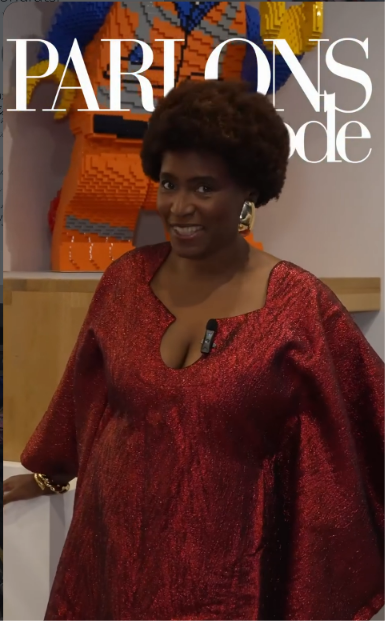
She has written on fashion for ELLE Côte d'Ivoire, and through her #RosyVousConseille and #ParlonsMode capsules she explains, with rigour and a measure of humour, why a dress code is never neutral and why cultural appropriation is a question of history before it is a question of taste.
Beyond the wax monoculture
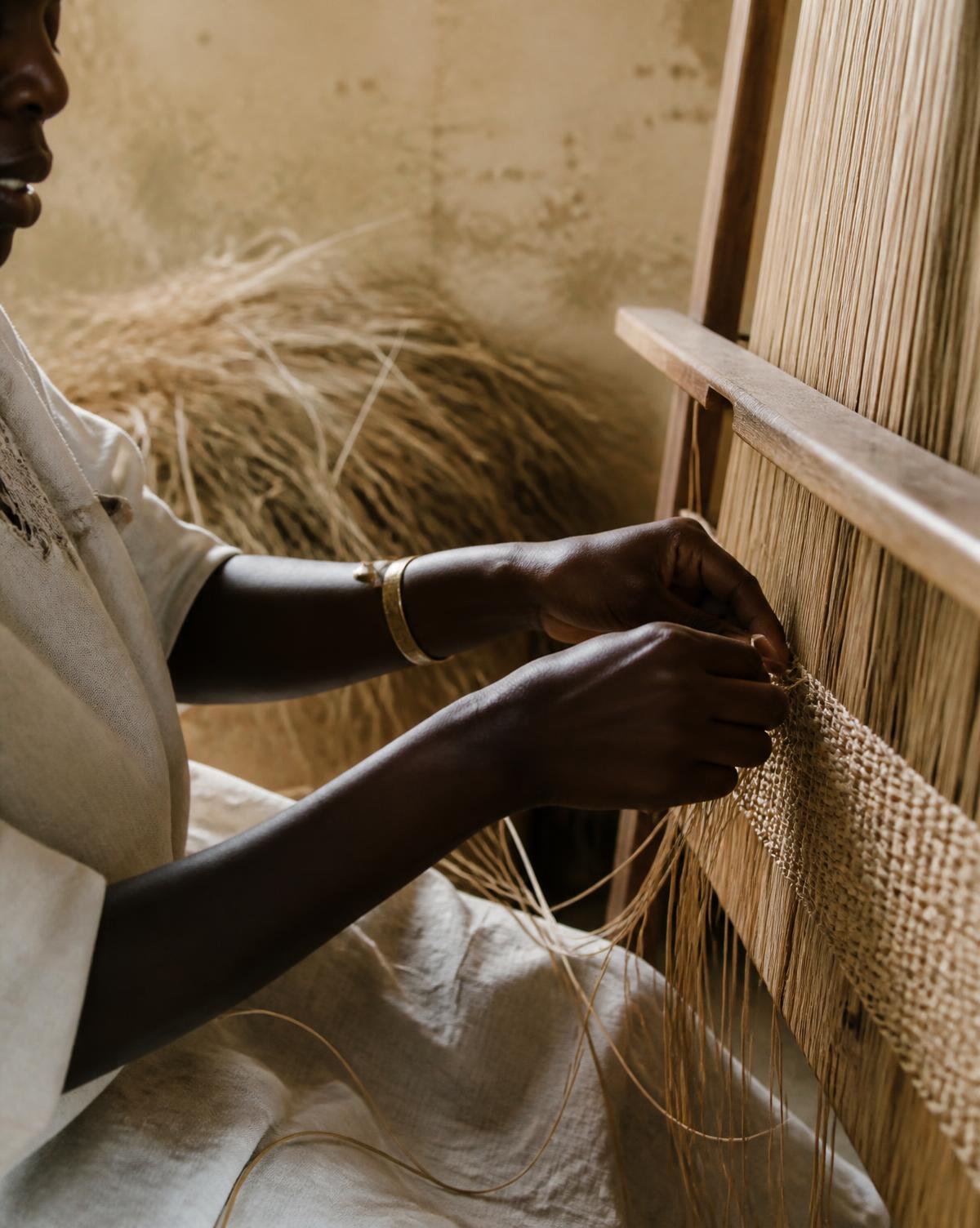
Few objects are as loaded, in the diaspora, as wax print. Industrially produced in Europe and adopted across West and Central Africa, it has become shorthand for "African fashion" in shop windows and on runways. Sambwa takes the debate seriously from both sides, and uses it as a doorway rather than a verdict. Behind the wax lies an older and far more technical vocabulary: raffia cloth woven and embroidered in the Kuba kingdom, bark cloth beaten into supple sheets, plant dyes fixed with mud and mineral, strip weaving assembled into ceremonial textiles.
To speak of African fashion, she reminds her audiences, does not require the designer to be Black, nor the fabric to be wax. And African designers are not confined to the continent. These are not provocations; they are corrections to a narrative that has long been written elsewhere.
The living museum
Since 2023, Sambwa has worked as a stylist and textile researcher at the Royal Museum for Central Africa in Tervuren, whose collections hold more than 6,700 textiles, most of them from Central Africa. Her research focuses on techniques, dyes and materials, with a view to publication and to preservation systems that could also serve today's manufacturers.
The ambition is significant. An archive is usually treated as a place of conservation, a room where objects stop moving. Sambwa treats it as a technical library: a source of methods that can be studied, documented and, under the right conditions, returned to working ateliers.
In October 2023, during Brussels Fashion Week and the museum's 125/5 anniversary, she staged Aya Afrikaanse Fashion Héritage there: three days of talks, an exhibition and a show, bringing together experts from more than ten countries and six designers from the Belgian diaspora, a deliberate nod to the Antwerp Six. The title combines four languages, Ngandi, Dutch, English and French, and translates as "I am the heritage of African fashion." Each word holds a piece of history: her grandfather's language, the language of the colonial administrators he met, the language of global business, and the language Belgium still shares with its former colonies.
Decolonising the wardrobe
Who decided how we dress? What did colonisation leave in our wardrobes? Does the way another person dresses shape how we see them? These were the questions of her 2022 MuseumTalk, "Décolonisons la garde-robe." Clothing, she argues, was used to build a superior image of some peoples over others. It can also be used to undo that image.
Her analysis of the pink-and-white gingham of the Parisian discount store Tati is a fine example. Designed as a marketing device, it travelled to the markets of West and Central Africa, where tailors and designers adopted, reworked and re-signed it, until it returned to international runways as a cultural marker. A cheap print became a visual language. The direction of influence, in other words, is rarely the one we assume.
Why it matters for luxury
For the maisons JAANTE works with, on both sides of the Mediterranean, Sambwa's work is more than cultural context. It is commercial intelligence. A brand that knows the provenance of its techniques can tell its story precisely, price its craftsmanship honestly, and avoid the reputational cost of borrowing what it does not understand. Authentic luxury is first read, then acquired; Sambwa supplies the reading.
Her message to students, brands, institutions and HR teams is the same: fashion goes far beyond beauty, taste or trend. It is a business rooted in history, time and identity. Understanding the archive is how that business stops repeating the past and starts paying it back.
Continue reading