
luxury-culture-identity
Material Memory: Textile Restitution and the Reconstruction of Historical Archive Collections
Exploring the profound intersection of historical restitution and modern craftsmanship, where the return of archival textiles serves as the foundation for reconstructing heritage and redefining the parameters of true luxury.
20 September 2026 · 8 min

The fabric of a society is rarely a mere metaphor; more often, it is a literal description of how a culture binds its history, philosophy, and social structures together. In the precise architecture of a woven textile, one finds a historical document as rigorous and nuanced as any written manuscript. For centuries across the African continent and the broader global south, the loom has served as an instrument of sophisticated cultural transmission. It is a mechanism through which societies recorded their cosmologies, their ecological knowledge, and their relationships to the natural world. This concept of material memory—the understanding that inanimate textiles hold the physical and intellectual imprint of their makers—forms the absolute foundation of how we must approach the contemporary discourse surrounding luxury culture and heritage preservation.
When historical collections were fragmented and dispersed into global museum vaults during periods of colonial expansion, a profound thread of knowledge was severed. The extraction of these textiles was not merely the removal of beautiful objects; it was the dismantling of an epistemic archive. To understand the current movement toward the restitution of these garments and fabrics is to look beyond the political dimensions and recognize a deeply cultural imperative. The return of these textiles represents the reconstruction of an interrupted dialogue, allowing contemporary artisans and designers to read the material language of their ancestors and, ultimately, to speak it once again.
The Ontology of the Woven Thread
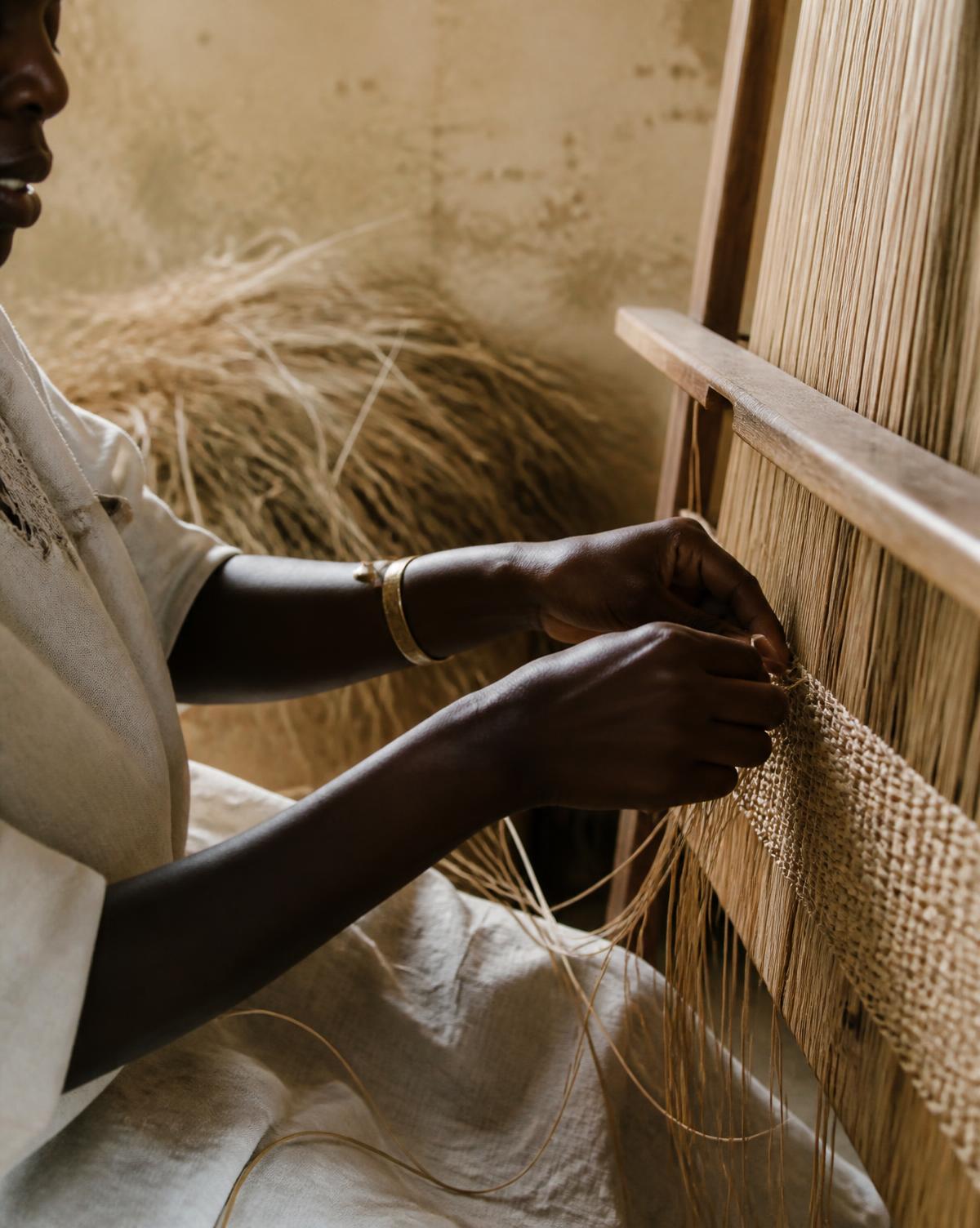
In the study of heritage craft, the textile functions as an ontological record. The choice of fiber, the chemistry of the natural dyes, and the mathematical rhythm of the weave are not arbitrary aesthetic decisions. They are deliberate acts of communication. In many West African weaving traditions, for example, the loom operates as a site of philosophical articulation. Each geometric motif operates as a syllable, each color acts as punctuation, and the finished cloth is a narrative text meant to be read by those initiated into its visual language. When these masterworks were removed from their communities of origin, the artisans left behind were abruptly cut off from their own historical reference materials.
The loss of these archival pieces meant a gradual loss of literacy in certain highly specialized techniques. Without the physical garments to study, succeeding generations of weavers had to rely on fragmented oral histories and diminishing material evidence to sustain their craft. Therefore, cultural identity fashion cannot be understood simply as the superficial application of traditional motifs onto modern silhouettes. Authentic cultural expression in fashion requires a structural understanding of how these garments were originally conceived and constructed. It is a rigorous process of remembering and re-learning, demanding an intellectual engagement with the past that transcends mere pastiche.
Today, the modern artisan faces the monumental task of piecing together these historical fragments. They must operate not only as creators but as material historians, carefully studying the tension of vintage threads and the fading hues of ancestral indigo to reverse-engineer the genius of their predecessors. This endeavor transforms the act of weaving from a routine mechanical process into a profound act of cultural reclamation, re-establishing a continuum of knowledge that had been artificially interrupted.
Restitution as Epistemological Recovery
The global conversation regarding the restitution of cultural property has reached a critical inflection point, moving slowly from academic debate to institutional action. In the seminal 2018 report commissioned by the French presidency, scholars Felwine Sarr and Bénédicte Savoy meticulously outlined the moral, historical, and cultural imperatives of returning African heritage held in European collections. While much of the public focus has remained on bronze sculptures and ceremonial artifacts, the restitution of textiles holds an equally vital, albeit more fragile, significance. Institutions such as the Musée du Quai Branly and the Victoria and Albert Museum are increasingly engaging in complex dialogues concerning the provenance and eventual repatriation of their textile holdings.
When global institutions begin the measured process of returning these textiles, or even opening their vast archives to comprehensive digital and physical access for originating communities, they are effectively returning the missing pages of an artisanal manuscript. For the contemporary designer, these repatriated textiles are not dead artifacts destined to languish behind temperature-controlled glass. They are living blueprints. They offer critical data on forgotten natural dye recipes, indigenous spinning techniques, and structural innovations that predate the industrial revolution. The access to this material memory allows for an epistemological recovery that fuels the most sophisticated levels of modern design.
This restorative process fundamentally alters the landscape of luxury culture. It shifts the paradigm from one of extraction and imitation to one of genuine authority and deep respect. By engaging with these historical archives, contemporary African brands are not seeking permission from the West; rather, they are reclaiming their rightful position within a global lineage of exceptional craftsmanship. They are demonstrating that the future of design lies in a comprehensive understanding of its origins, proving that innovation is most potent when it is rooted in profound historical literacy.
Quiet Luxury and the Currency of Provenance
In recent years, the terminology surrounding high-end fashion has been dominated by the concept of quiet luxury. However, this term is frequently misconstrued as a mere aesthetic directive—a preference for minimalist silhouettes and neutral palettes devoid of visible logos. This is a shallow interpretation of a profound concept. True quiet luxury is not defined by an absence of branding, but by an overwhelming presence of meaning. It is the ultimate expression of provenance, where the value of a garment is inextricably linked to the verifiable, unbroken lineage of its creation.
The discerning patron of today seeks a depth of authenticity that cannot be manufactured through marketing. They demand to know the origins of the cotton, the hands that cultivated the dye, and the historical context of the weave. When a contemporary garment can trace its structural methodology back to a pre-colonial archival piece, it achieves a caliber of luxury that is extraordinarily rare. It becomes an object of deep intellectual and aesthetic resonance. This is where the reconstruction of historical archives intersects directly with the modern market, offering a level of traceability and cultural weight that mass-produced luxury simply cannot replicate.
Spaces dedicated to the curation of this caliber of work must operate with the exactitude of a museum and the forward-thinking vision of a modern gallery. Through environments like the JAANTE showroom, this reconstructed heritage is presented with the reverence it demands. Here, the garments are understood not as seasonal trends, but as enduring investments in cultural continuity. The emphasis is placed firmly on the mastery of the technique and the integrity of the material, allowing the profound provenance of the piece to speak for itself in a quiet, undeniable register.
The Architecture of the Future Archive
As the movement toward textile restitution and the reconstruction of material memory continues to evolve, the responsibility falls upon the current generation of designers, curators, and scholars to build the archives of tomorrow. The garments being meticulously crafted today, utilizing recovered techniques and sustainable practices, are the historical documents that future generations will study. They must be constructed with an unwavering commitment to quality, ensuring they possess the physical and cultural longevity to survive the centuries.
This ambitious endeavor requires an infrastructure of support, education, and critical discourse. The preservation of heritage craft is not a static achievement; it requires an ongoing, rigorous dialogue between the past and the present. It is a complex narrative that is carefully documented and explored through platforms like JAANTE insights, where the philosophical underpinnings of material memory are continually analyzed. Ultimately, the restitution of textiles is not merely about looking backward. It is a vital mechanism for moving forward, ensuring that the legacy of exceptional craftsmanship remains an enduring, defining pillar of global luxury.
Continue reading