
retail-showrooms-distribution
The Transnational Showroom: Rethinking Wholesale Presentation During Paris and Milan Market Weeks
As the traditional trade show wanes, the future of fashion distribution relies on curated, transnational showrooms that prioritize architectural restraint, cultural nuance, and deep tactile engagement.
25 September 2026 · 7 min
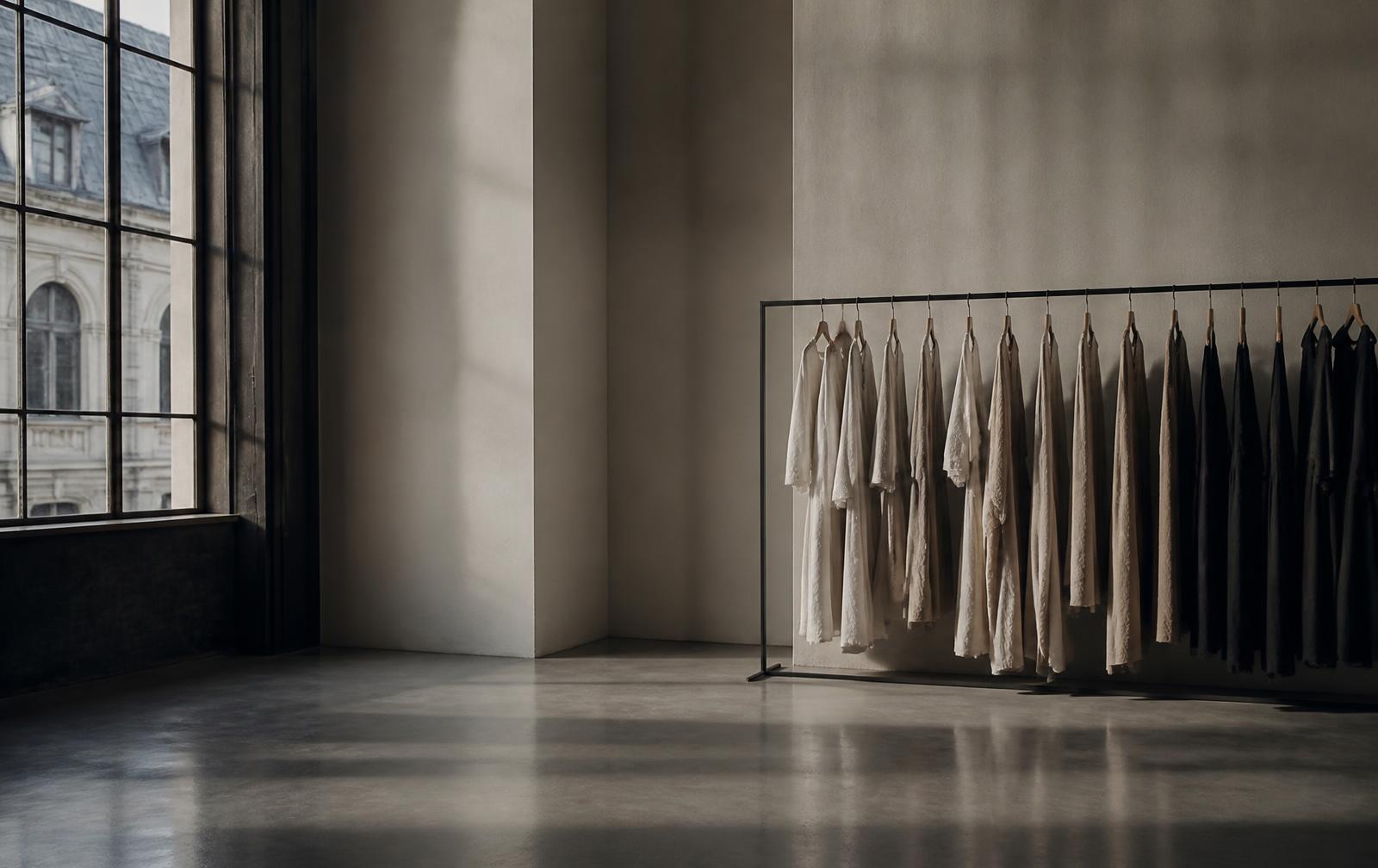
Paris in late September, or Milan in late February. The rhythm of market week is a well-documented cadence of appointments, velvet-roped venues, and the quiet rustle of lookbooks. It is a season of rigorous evaluation, where the aesthetic propositions of designers are weighed heavily against the commercial realities of the retail floor. Yet, the architecture of the wholesale transaction is shifting fundamentally. For decades, the trade show floor dictated the parameters of fashion distribution: a grid of partitioned booths, fluorescent lighting, and an overwhelming volume of product that favored noise over nuance. Today, the discerning buyer seeks sanctuary from this sensory overload. The emergence of the transnational fashion showroom offers a much-needed recalibration of this dynamic, proposing spaces where geography becomes fluid and the garment is allowed to breathe. As African luxury brands increasingly claim their rightful presence on the European calendar, the physical environment in which their collections are presented must reflect the same rigor, heritage, and uncompromising quality inherent in the garments themselves. The showroom is no longer just a room with rails; it is a diplomatic space of cultural and commercial exchange.
The Decline of the Monolithic Trade Show
Historically, the wholesale model relied on sheer aggregation. Buyers from prominent department stores and independent multibrand boutiques would traverse cavernous exhibition halls, evaluating hundreds of emerging and established brands in a matter of hours. While this model prioritized a certain brutal efficiency, it actively stripped collections of their nuance and context. The traditional trade show, with its rigid temporary walls and standardized visual merchandising, struggles profoundly to communicate the ethos of slow, sustainable fashion. Institutions such as the Fédération de la Haute Couture et de la Mode have long understood that the presentation of fashion is inextricably linked to its perceived value, gradually curating official calendars that increasingly favor intimate formats over mass gatherings. This institutional pivot mirrors a broader, more profound psychological shift among buyers. The modern fashion showroom is designed as a domestic or gallery-like intervention, a quiet architecture that commands attention through reduction rather than multiplication. When presenting transnational collections—where the narrative of production spans continents, from a weaving cooperative in Burkina Faso to a tailoring atelier in Dakar, and finally to a minimalist rack in the Marais—the environment must serve as a respectful, unobtrusive conduit. Here, the architecture of the showroom becomes an extension of the brand's quiet confidence, allowing the craftsmanship to speak without the necessity of shouting.

Visual Merchandising as Cultural Context
Visual merchandising within the transnational showroom demands a delicate, highly considered sophistication. It is an exercise in absolute restraint. The objective is never to recreate a localized marketplace, but to present African craftsmanship within the universal, exacting lexicon of contemporary luxury. The textiles—whether it is the structural density of hand-loomed Aso Oke, the organic fluidity of peace silk, or the intricate geometry of Bogolanfini—require spatial margins to accurately articulate their drape, weight, and finish. By stripping away extraneous cultural signifiers and avoiding the pitfalls of folkloric staging, visual merchandisers allow the intrinsic technical mastery of the garments to become the primary focal point. Lighting plays a critical role in this delicate translation. The stark, uncompromising glare of the conventional trade show flattens texture, erasing the subtle variations that signify the human hand. Conversely, the curated showroom utilizes ambient and directional illumination to highlight the architectural lines of a silhouette or the complex warp and weft of a sustainable weave. The spatial arrangement of the garments, often suspended on minimalist, bespoke fixtures made of brushed steel or reclaimed wood, encourages the buyer to engage physically. This tactile interaction remains the foundational premise of fashion distribution; a buyer must touch the hem, inspect the internal bindings of the seams, and feel the weight of the bespoke hardware before committing to a seasonal order. The staging resembles the meticulous curation of fine art, subtly reinforcing the narrative that these are investment pieces designed to endure far beyond the fleeting, wasteful cycles of seasonal trends.
The Sales Agent as Cultural Translator
Beyond the aesthetic arrangement of the physical space, the efficacy of the transnational showroom relies almost entirely on the expertise and diplomacy of the sales agent. In this elevated context, the agent is far more than a transactional facilitator tasked with filling out order sheets; they are cultural translators and strategic business advisors. When introducing European buyers to African luxury brands, the sales agent must expertly navigate complex conversations that bridge distinct operational realities and cultural paradigms. They articulate the realities of artisanal production timelines, the meticulous sourcing of indigenous natural dyes, and the profound social impact embedded within the brand's supply chain, seamlessly translating these rich narratives into the rigorous demands of European fashion distribution. The contemporary buyer requires absolute certainty regarding delivery schedules, wholesale margin structures, import duties, and scaling capabilities. The sales agent bridges this logistical divide, providing the necessary reassurance and operational transparency that transforms a beautifully conceived collection into a viable, secure retail investment. Through deep, unhurried appointments, they educate the buyer on the specific provenance of the materials, ensuring that when the garments eventually reach the shop floor in London, Berlin, or Copenhagen, the retailer is fully equipped to pass that rich, accurate narrative on to the final consumer. This methodical, respectful approach to wholesale aligns perfectly with the broader mission of the JAANTE showroom, where the facilitation of long-term, equitable partnerships takes absolute precedence over rapid, unsustainable seasonal growth.
Fluidity and the Pop-Up Retail Approach
The boundaries between wholesale presentation and consumer-facing environments are becoming increasingly, and deliberately, porous. A compelling development observed during recent market weeks in Paris and Milan is the integration of the pop-up retail sensibility directly into the wholesale showroom environment. While the primary function of the space remains strictly business-to-business, the atmospheric execution mirrors the immersive nature of avant-garde, direct-to-consumer retail. This approach recognizes that buyers, despite their professional objectivity and reliance on sell-through data, are still profoundly susceptible to the emotional resonance of a beautifully conceived environment. By incorporating subtle elements of lifestyle curation—bespoke mid-century furniture, curated olfactory profiles, and carefully selected, heavy-stock print materials—the showroom offers a holistic vision of how the brand might inhabit a physical store. For African designers presenting in Europe, this holistic staging is undeniably crucial. It answers the buyer's unspoken question of context, demonstrating exactly how these collections can sit seamlessly alongside established, heritage European houses in a rigorous multibrand boutique. It proves, beyond any doubt, that the garments do not require a separate, categorized space, but rather belong organically in the central curation of modern global luxury. As we observe the continued evolution of these vital market weeks, the emphasis will undoubtedly remain on these nuanced, cross-cultural spaces that prioritize connection over sheer volume. Buyers interested in exploring this new paradigm of curated sourcing can discover more through tailored resources designed for buyers who are deeply committed to expanding their portfolios with integrity, foresight, and an appreciation for global craft. The transnational showroom is not merely a temporary address during a chaotic market week; it is a permanent, vital shift in how the industry perceives, values, and distributes the global future of fashion.