african-designers-artisans
The Loom as Architectural Discipline: A Study of Artisanal Weaving Collectives in Ségou
A considered exploration of the structural and rhythmic rigor defining Ségou’s master weavers, where the traditional narrow-strip loom transcends textile production to become a profound exercise in spatial and architectural engineering.
24 September 2026 · 7 min
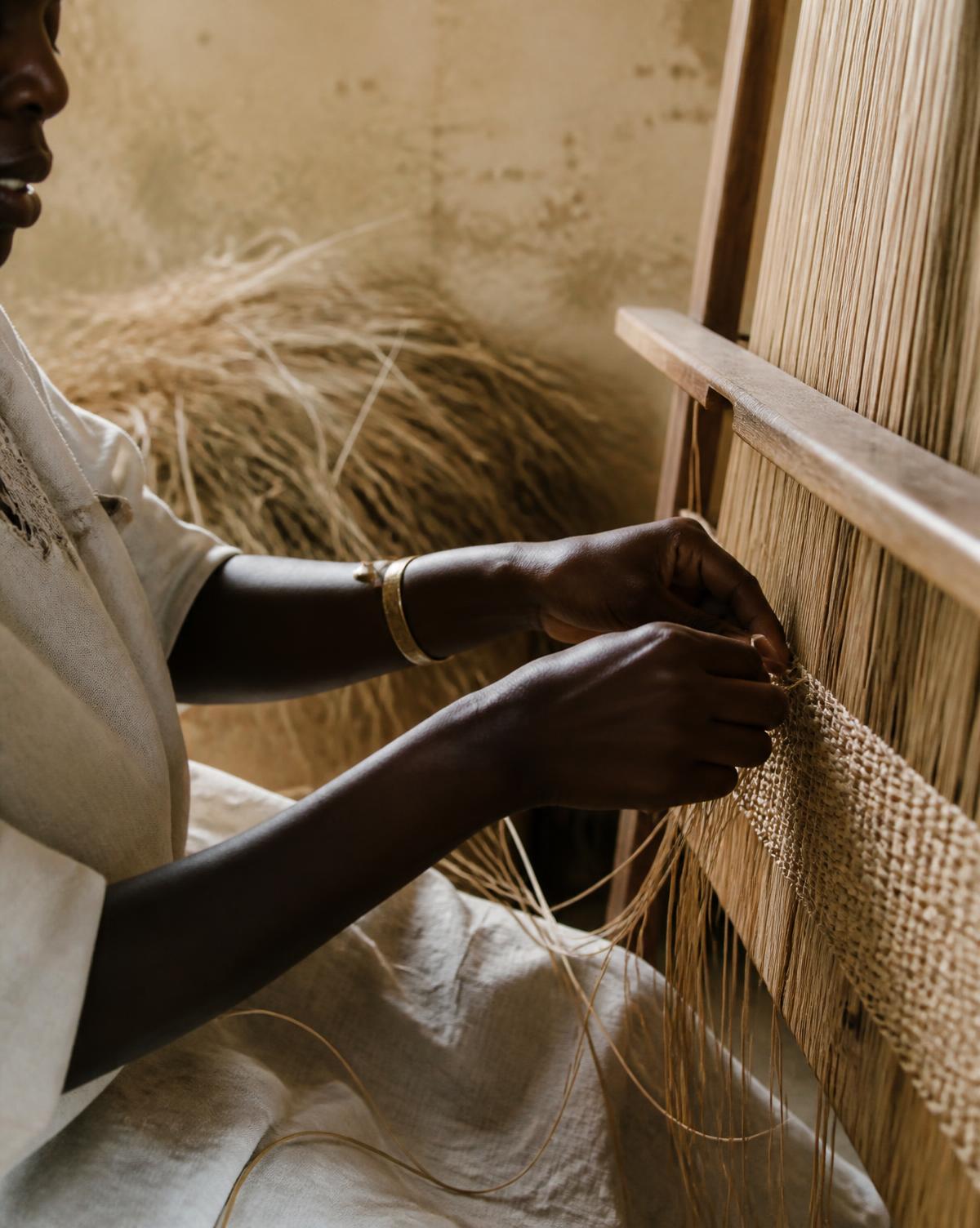
Ségou, situated along the languid, ochre-tinted waters of the Niger River, has long stood as a quiet epicenter of West African textile mastery. Here, beneath the shade of ancient neem trees and within the sun-baked clay walls of ancestral family compounds, the act of weaving transcends the mere production of cloth. It emerges, upon close and considered observation, as a rigorous exercise in architectural discipline. The traditional West African narrow-strip loom is not simply a tool for interlacing yarn; it is a complex structural apparatus, a framework of tension, geometry, and counterweight that requires the weaver to possess the spatial intelligence of a master builder. In documenting the nuanced practices of african artisans, it becomes undeniably evident that the loom is a site of profound engineering, where tactile materiality meets mathematical precision in a continuous, uninterrupted rhythm of creation.
To observe a weaving collective in Ségou is to witness a temporary architecture erected and dismantled with the seasons. The loom itself interacts directly with the topography of the courtyard. It is not a self-contained, freestanding machine housed within an industrial warehouse, but rather an expansive installation that commands the physical environment. The warp threads—often extending out across the earth for many meters—are held in strict tension by a heavy drag-weight, typically a large stone or a heavy sled resting on the dusty ground. As the artisan weaves, this weight is imperceptibly drawn forward, inch by meticulous inch, measuring time and progress across the courtyard floor. The spatial requirement of this setup dictates the layout of the living and working spaces, seamlessly integrating the demands of the craft into the daily choreography of the household.

The Geometry of Tension and Structural Integrity
The fundamental principle of this craft is structural integrity. Every intersection of warp and weft is a load-bearing joint. The weaver operates a pair of heddles suspended from a simple pulley system, often carved from dense local wood, which is tied to an overhanging branch or a wooden tripod. Beneath the loom, the artisan’s feet rest on pedals dug into shallow pits in the earth, engaging the entire lower body in the rhythmic separation of the warp threads. The beater, a heavy wooden comb, is pulled sharply toward the weaver with each pass of the shuttle, compressing the weft to create a dense, structurally sound textile capable of enduring generations of use.
This meticulous construction process yields a long, narrow ribbon of cloth. The narrow-strip weaving tradition is deeply embedded in the historical and cultural fabric of the region. Institutions such as the Smithsonian National Museum of African Art have long documented the continuity and complexity of West African strip-weaving traditions, noting how these seemingly simple bands of cloth carry immense cultural, economic, and structural significance. The strip is the foundational module of the textile, akin to a brick in a grand architectural edifice. A single artisan may spend days producing a continuous coil of this narrow band, maintaining a perfectly consistent width and tension throughout, a feat of endurance and precision that defines a true artisan portrait.
Ancestral Cadence and the Modern Atelier
The auditory landscape of the weaving compound is defined by a deep, percussive cadence. The clack of the wooden beater, the soft whisper of the shuttle flying through the shed, and the rhythmic thud of the pedals create a symphonic backdrop to the working day. This rhythm is not merely incidental; it is the pacing mechanism by which the weaver regulates the tension of the cloth. If the rhythm falters, the tension shifts, and the structural integrity of the weave is compromised. The body of the weaver thus becomes an extension of the loom, an organic engine driving a highly calibrated mechanical process.
Within the broader context of the atelier africa, the master weaver does not operate in isolation. The production of luxury textiles in Ségou is a deeply collaborative, sequential architecture of labor. Long before the cotton reaches the loom, it is processed, spun, and dyed by a network of specialized artisans, predominantly women. The raw cotton is hand-spun into yarn, an arduous process that introduces a unique, uneven texture to the thread, giving the final cloth its distinct, tactile vitality. The yarn is then often dyed using organic local materials—indigo leaves, mud, or bark infusions—rooting the textile inherently in the terroir of the Niger River basin. The atelier functions as a micro-city of production, where every stage is dependent on the flawless execution of the prior.
Modular Assembly and Sartorial Geometry
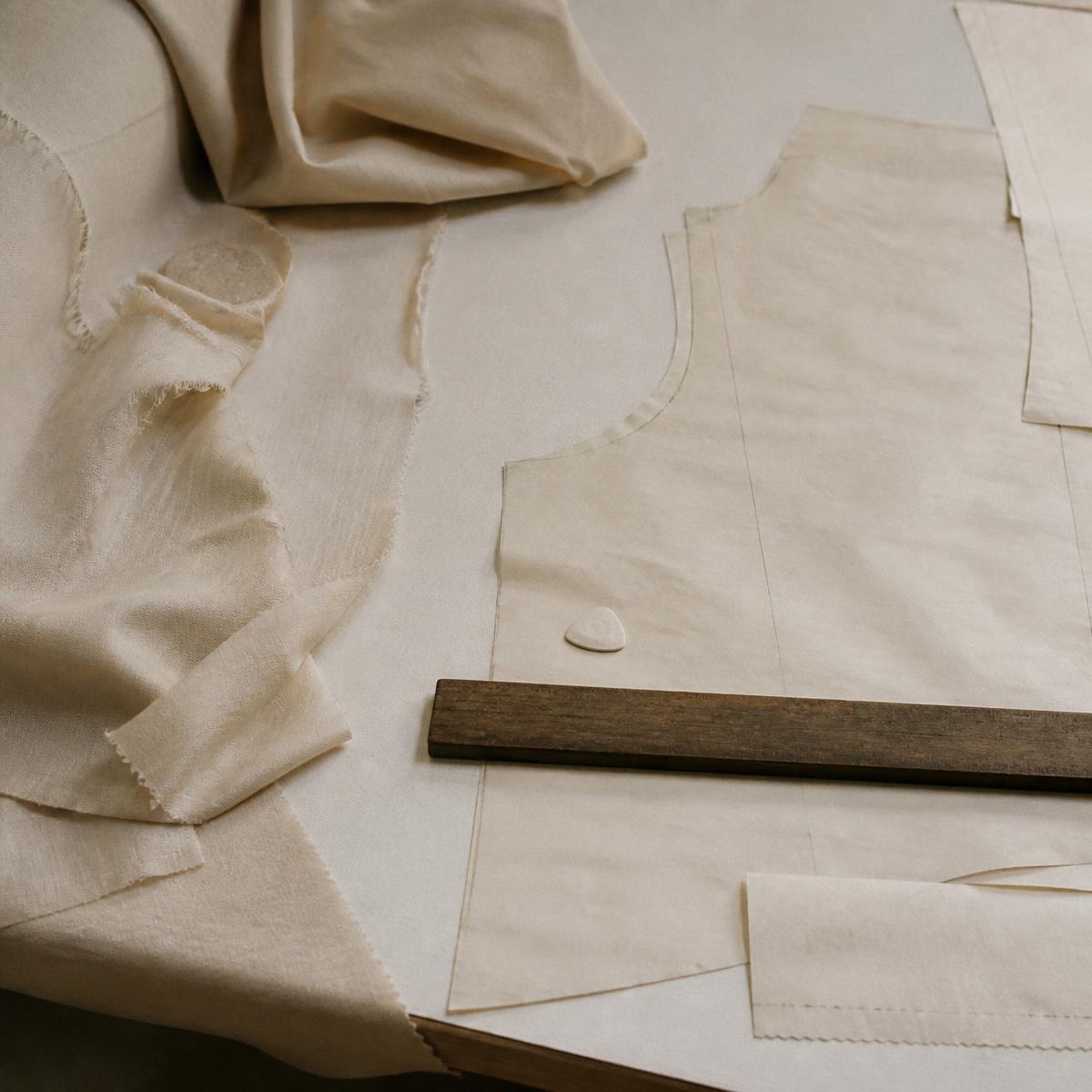
The architectural nature of the narrow-strip textile becomes most apparent during its assembly. Once the weaving is complete, the long coils of cloth are cut into specific lengths and meticulously hand-sewn edge-to-edge. This modular construction method requires extraordinary foresight on the part of the weaver. If a geometric pattern has been introduced into the weave, the artisan must calculate the spacing perfectly so that when the strips are eventually placed side-by-side, the motifs align to form larger, cohesive geometries across the expanse of the finished garment or blanket.
It is precisely this architectural discipline and structural beauty that draws contemporary african designers to the Ségou collectives. The modern luxury sector increasingly seeks materials that carry weight, history, and unmistakable human touch. By utilizing traditional narrow-strip cloth, designers are not merely sourcing fabric; they are incorporating a complex spatial language into their silhouettes. The modular nature of the cloth influences the cut and drape of the final garment, dictating an aesthetic that respects the linear geometry of the original strips. For an expansive look at how regional techniques are shaping modern aesthetics, one might explore the curated narratives within JAANTE’s territorial archives, which chronicle the intersection of ancestral methodology and contemporary design.
Preserving the Spatial Dynamics of the Craft
The future of handcraft africa relies heavily on the preservation of these spatial and structural dynamics. The traditional drag-weight loom requires physical space—a luxury that is becoming increasingly scarce in rapidly urbanizing centers. The sprawling courtyards of Ségou remain vital sanctuaries where the architecture of the loom can still dictate the rhythm of the day. Without this physical space, the long warps cannot be stretched, and the fundamental mechanics of the craft would be irrevocably altered.
Furthermore, the integration of these deeply artisanal textiles into the global luxury market must be handled with profound respect for the weavers' pacing. The structural integrity of the cloth cannot be rushed to meet industrial timelines. The value of the textile lies precisely in the slow, considered cadence of its creation. As these textiles find their way into high-end fashion and refined interior spaces—environments championed by platforms such as the JAANTE showroom—they serve as quiet ambassadors of a methodical, unyielding dedication to craft.
Ultimately, the artisanal weaving collectives of Ségou offer a masterclass in discipline. The loom is not a relic of a bygone era, but an active, sophisticated technology of tension and space. The artisans who operate these structures are architects of fiber, building textiles one rhythmic, deliberate intersection at a time. Their work stands as a testament to the enduring power of manual intelligence and the profound beauty that arises when human endurance aligns perfectly with geometric constraint.
Continue reading