Lamine Kouyaté and the Legacy of XULY.Bët: Thirty Years of Reconstructed Couture and Urban Modernism
Long before sustainability became an industry mandate, Malian-Senegalese designer Lamine Kouyaté pioneered the art of reconstructed couture, challenging the Parisian establishment with an unapologetic vision of urban modernism.
23 September 2026 · 8 min
In the late 1980s, the Parisian fashion establishment operated as a fortress of polished exclusivity, heavily guarded by the traditional codes of haute couture and ready-to-wear syndicates. It was a space that rarely looked outward, save for colonial inspirations entirely divorced from the realities of modern urban culture. Into this environment stepped Lamine Kouyaté, a designer of Malian and Senegalese descent, who carried with him a radically different proposition for what clothing could represent. Abandoning his formal studies in architecture at the École Nationale Supérieure d'Architecture de Strasbourg, Kouyaté turned his meticulous attention to the human form, establishing XULY.Bët in 1989.
The name, drawn from the Wolof language, translates to an imperative instruction: keep your eyes open. For more than three decades, Kouyaté has demanded precisely this from the global fashion industry, forcing an ongoing confrontation with consumption, waste, and the vibrant realities of the African diaspora.
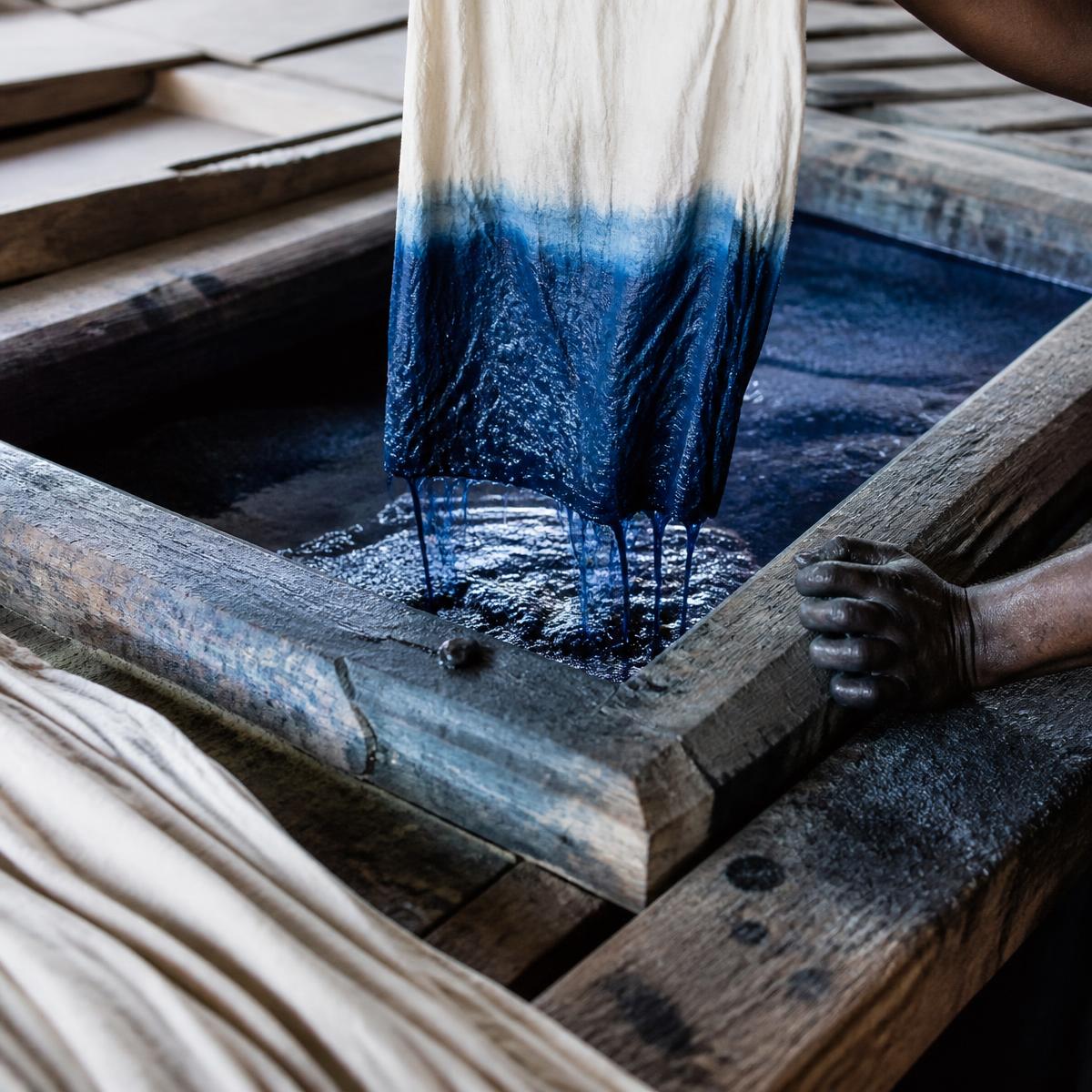
Indigo Dye
Before the terminology of sustainable fashion and circularity entered the corporate lexicon, Kouyaté was engaging in a visceral, hands-on practice of reconstruction. His methodology was born not from a calculated marketing strategy, but from an intuitive response to the material excess he witnessed in European flea markets and charity shops. He observed vast quantities of discarded garments, the heavy detritus of Western overproduction, and saw profound architectural potential. By cutting, splicing, and reassembling these forgotten pieces, he forged an entirely new aesthetic. It was a visual language that resonated deeply with the energy of global street culture, blending the improvisational spirit found in West African urban centers with the raw, uncompromising attitude of underground Paris.
The Architecture of the Discarded
Kouyaté’s transition from architecture to fashion is evident in the structural integrity of his garments. Where traditional tailors might seek to hide their construction behind immaculate linings, XULY.Bët celebrated the mechanics of the make. The foundational element of his early work was the visible overlock stitch, typically rendered in a stark, contrasting red thread. This was never merely a decorative flourish. The red thread functioned as a vital, pulsing artery that held disparate fabrics together, symbolizing bloodlines, connectivity, and the visible hand of the maker. It was a deliberate subversion of the hidden labor that defined luxury fashion, pulling the reality of garment construction directly to the surface.
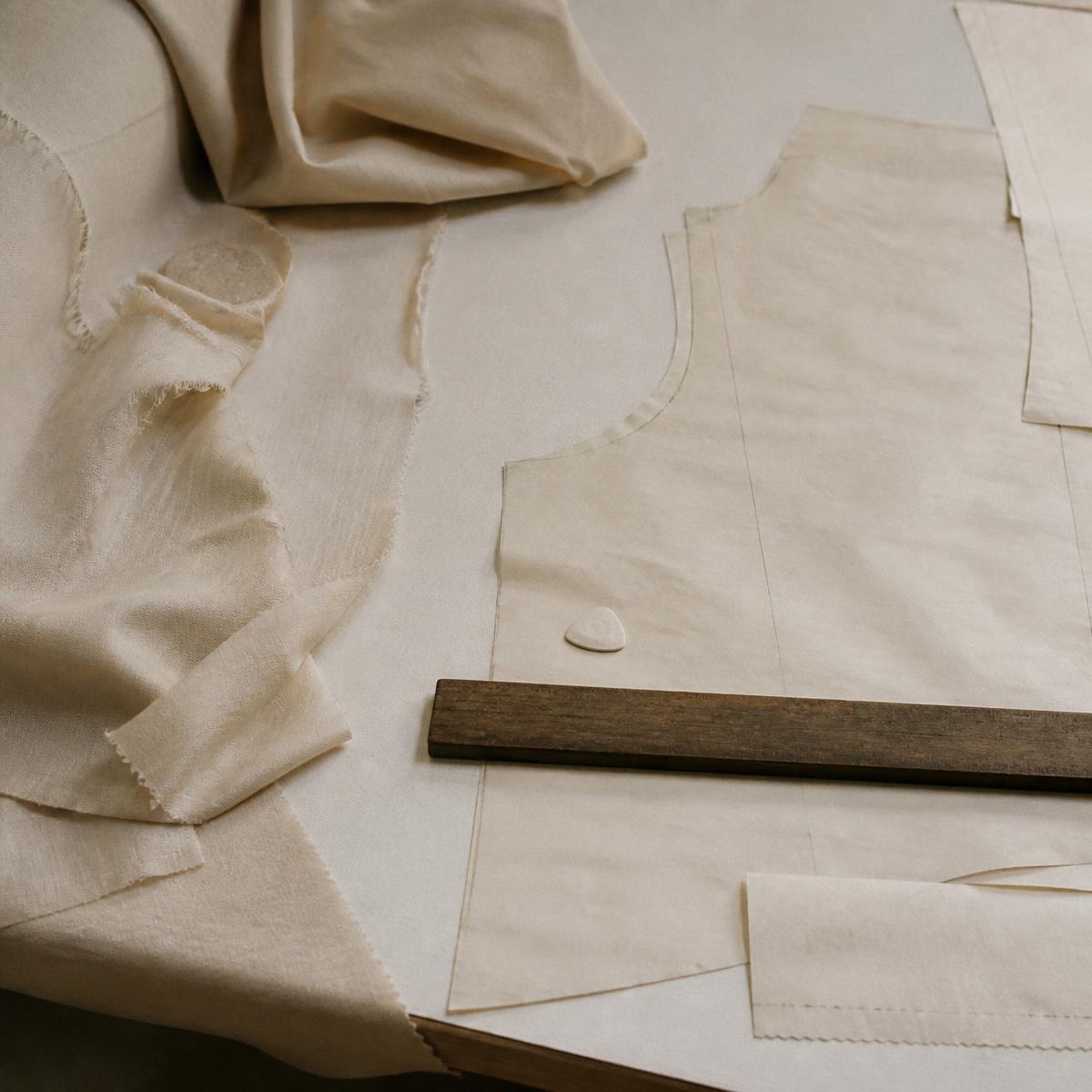
This approach to garment making required a profound understanding of textiles, drape, and form. By working with existing garments—a nylon sportswear jacket, a discarded floral tea dress, a men's heavy wool suit—Kouyaté had to navigate the pre-existing geometry of the clothes. The resulting silhouettes were dynamic and body-conscious, stretching and wrapping around the wearer in ways that defied traditional, flat pattern making. This rigorous practice elevated the act of upcycling into a refined discipline. It highlighted the intrinsic value of manual intervention, bridging the gap between raw street style and meticulous artisanship. In recognizing the depth of such practices, we observe the historical blueprint for many contemporary african designers who continue to challenge linear models of production across the globe.
The atelier of XULY.Bët operated as a laboratory of material transformation. Here, the traditional hierarchies of fabric were systematically dismantled. High luxury and low utilitarian materials collided in a single garment, stitched together with the same democratic red thread. This technique spoke volumes about identity, displacement, and the immigrant experience in Europe, piecing together fragments of different cultures to create a unified, resilient whole. It articulated the complexities of multiculturalism with a quiet dignity, long before diversity became a mandate for modern fashion houses.
Guerilla Runways and Institutional Recognition
The presentation of XULY.Bët collections was as radical as the garments themselves. In an era when fashion shows were rigid, invitation-only affairs held in gilded salons or pristine tents at the Carrousel du Louvre, Kouyaté deliberately took his work to the streets. His guerilla-style presentations occurred in unexpected locations: abandoned hospitals, metro stations, and public squares. The models were often a diverse cast of friends, musicians, and creatives from his community, walking with an unchoreographed, kinetic energy that contrasted sharply with the somber march of traditional runway mannequins.
These presentations were a direct challenge to the exclusionary tactics of the industry, asserting that fashion belonged inherently to the city and its inhabitants. Despite this outsider stance, the establishment eventually had to acknowledge the seismic shift he was causing. The undeniable influence of XULY.Bët on the aesthetics of the 1990s earned Kouyaté the prestigious ANDAM Fashion Award in 1994. Furthermore, his work has been rightfully archived and exhibited by esteemed cultural bodies, notably including the Palais Galliera in Paris, which formally recognized his vital contribution to the evolution of contemporary dress. Such institutional acknowledgment cemented his status not merely as a provocateur, but as a master craftsman whose vision anticipated the future of global fashion.
Following his success in Paris, Kouyaté expanded his vision across the Atlantic, opening a boutique on Orchard Street in New York City. There, he translated his Parisian underground sensibilities to the Lower East Side, capturing the attention of the American fashion press and fostering a cross-continental dialogue on race, style, and sustainability. His trajectory provides a crucial context for our wider exploration of the continent's creative ecosystem, which is documented comprehensively within the JAANTE Africa archives.
Handcraft and the Modern African Atelier
The enduring legacy of XULY.Bët is deeply intertwined with the concept of handcraft and the evolution of the modern studio. While Kouyaté’s work was heavily associated with global street culture, its philosophical roots lay in the resourcefulness and ingenuity characteristic of West African artisan networks. The careful deconstruction and reassembly of garments is a painstaking process that demands the same level of skill, patience, and attention to detail as traditional couture. It is a practice that requires the maker to respond organically to the material, making spontaneous, highly technical design decisions with every cut and stitch.
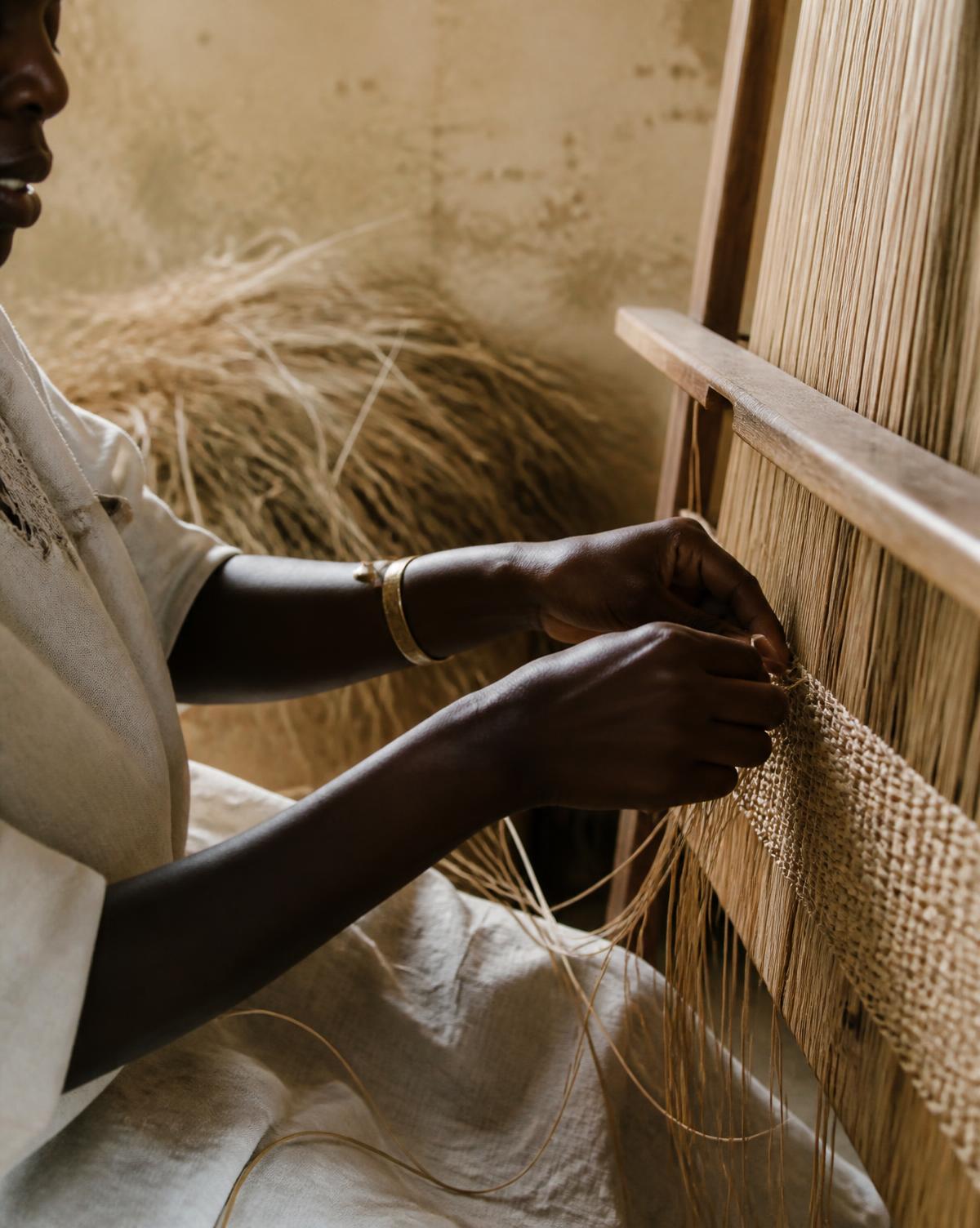
This methodology has profound implications for the contemporary atelier africa. Today, a new generation of creators across the continent and the diaspora are looking to Kouyaté’s model as a viable, sustainable approach to fashion. They are utilizing the immense volume of secondhand clothing that floods African markets, transforming the physical burden of global waste into raw material for high-end design. This cyclical process redefines the boundaries of handcraft africa, proving that artisanal skill is not strictly limited to ancestral weaving or beadwork, but actively encompasses the visionary restructuring of existing modern forms.
By elevating upcycling to the level of luxury, XULY.Bët fundamentally altered the perception of value in fashion. The brand demonstrated that a garment's worth is not dictated solely by the virginity of its fibers or the exclusivity of its origin, but by the intellectual and manual labor invested in its creation. This philosophy aligns with a deep-seated respect for material and maker, a core tenet for those seeking to understand the true nature of an artisan portrait in the modern era. The meticulous nature of this work requires an ecosystem that values longevity, repair, and craft over rapid consumption.
A Lasting Resonance in Sustainable Couture
As the global fashion industry currently grapples with the environmental devastation caused by fast fashion and overproduction, the principles established by Lamine Kouyaté thirty years ago have never been more relevant. The industry is attempting to reverse-engineer sustainability into its sprawling supply chains, frequently relying on technological fixes or superficial public relations campaigns. Yet, the foundational work of XULY.Bët proves that true sustainability is a structural, philosophical commitment. It requires a fundamental shift in how society perceives waste and a willingness to engage in the slow, considered labor of manual reconstruction.
Kouyaté’s ongoing work continues to embody this sober ethos. He has remained steadfast in his commitment to his original vision, refusing to compromise the integrity of his practice for the sake of mass commercial expansion. His garments remain artifacts of a continuing dialogue between the past and the future, the discarded and the cherished. For curators, buyers, and scholars looking to engage with authentic, enduring fashion practices, understanding the history of XULY.Bët is absolutely essential. Those interested in connecting with the current vanguard of african artisans and designers who share this uncompromising commitment to sustainable luxury can explore curated selections within the JAANTE showroom.
Ultimately, the story of Lamine Kouyaté is a testament to the power of careful observation. By instructing the world to keep its eyes open, he forced the industry to look at the discarded margins of society and recognize the profound beauty and structural potential that resides there. His legacy is permanently etched into the visible, red seams of modern fashion, serving as a lasting reminder that the most revolutionary acts of design are often those that seek to repair, rebuild, and unite.